


The Worldwide Catastrophic Deluge
By Tom DeRosa, Executive Director of CSI.
The Strong Implications of Genesis 7:11
The announcement of the Genesis flood, by its nature, would have been catastrophic in form. There would be nothing to compare to it because God’s judgment forever changed the earth’s crust through Noah’s worldwide flood. In Genesis 7:11, we witness two significant insights about the Genesis Flood that have profound implications. The first was a specific timestamp that specifies exactly when a monumental judgment event would begin. The Bible states that Noah was 600 hundred years old on the second month and seventeenth day of the calendar year. Noah’s age was confirmed previously in verse 6 as stated,
“And Noah was six hundred years old when the flood of waters was upon the earth.” Noah lived three hundred and fifty years after the flood, according to Genesis 5, which covered the genealogy of Adam’s family.
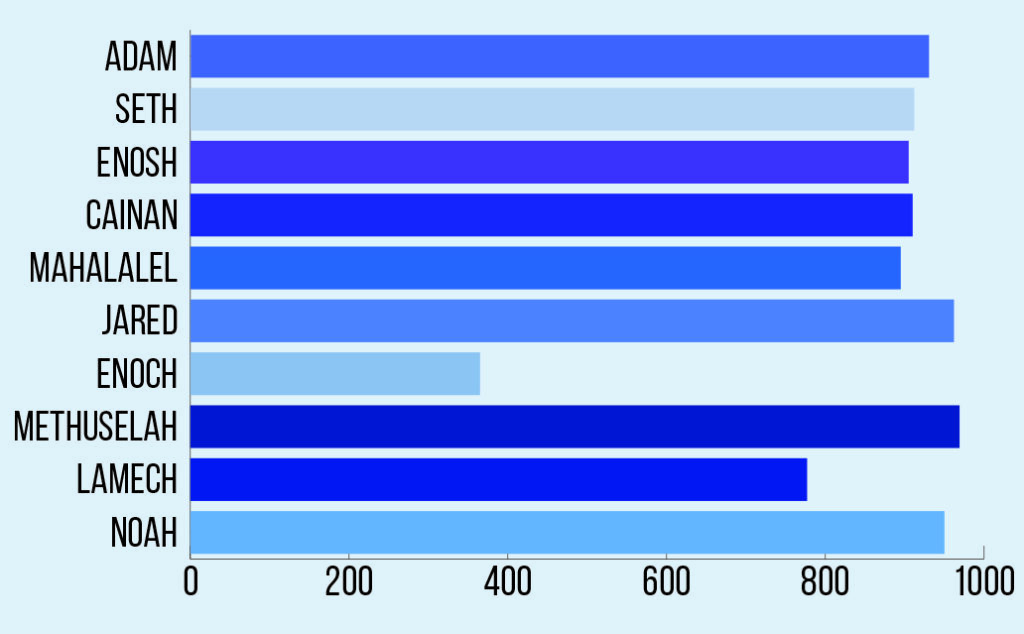
Before the flood, the average life span was over nine hundred years, including Methuselah, the oldest man ever to live on the earth, who lived to nine hundred and sixty-nine. It forces one to conclude that living conditions and biology were much different before the flood than what we observe today. The second insight explains how the earth’s surface would be changed forever, and all living land creatures, including mankind, would be destroyed when “all the fountains of the great deep [were] broken up, and the windows of heaven were opened.” It indicates that there is an incredible amount of water underneath the earth’s surface that would be the agent to change the crust worldwide forever. It also suggests that the most powerful geological forces that produce earthquakes, volcanoes, catastrophic plate tectonic movements, etc., release an inconceivable amount of heat, carbon dioxide, volcanic ash, and water. The water would be a key agent of destruction and would be released in liquid form and as steam from beneath. The steam would condense in the form of rain that lasted 40 days and nights, as stated in Genesis 7:4.
Pre-flood Conditions
Human mortality has always been a scientific challenge. Today, Saloni Dattanii et al. from Our World in Data, in an online article titled Causes of Death, summarize that cardiovascular heart disease and cancer are the highest causes of death worldwide, while infectious diseases are dramatically decreasing. Even though humankind is living longer because of medical interventions and modern advances in health, it cannot match the average span of nine hundred and twelve years during the pre-flood time, starting with Adam and ending with Noah. Medical science reveals that genetics are a significant determinant of human mortality, along with our present environmental factors. These factors had to be different before the flood to have longevity rates nine times what we have
today.
In Genesis 1, we are told that the work of Creation was “good” with God’s expression “it was good” six times. After the final act of creation, he said, “Then God saw everything that He had made, and indeed it was perfect. So, the evening and the morning were the sixth day.” (Genesis 1:31)
The early genetic profile of humans before the flood would reveal fewer genetic mutations (mistakes in the genetic code) because humanity was young, about ten generations old. It was because of the sin of man that death entered the world, and this produced a negative impact on our genetic profile. After the worldwide flood, living conditions changed dramatically due to the catastrophic effects of the flood. Creationists believe that the radiation from rocks and soil increased due to various active radioisotopes. Additionally, the fossil record during the pre-flood time demonstrates giantism, as observed with sauropods (giant dinosaurs), 160-footlong dragonflies with a wingspan of two feet, and many other fossils, including various plants showing a worldwide warmer climate. Creationists believe this could be a global green house effect in the atmosphere due to the increased presence of carbon dioxide and oxygen. This effect would have protected against dangerous cosmic and solar radiation, including the harmful UV light that causes skin cancer. Without this protection, all living beings would be negatively affected, as observed today.
The Fountains of the Great Deep
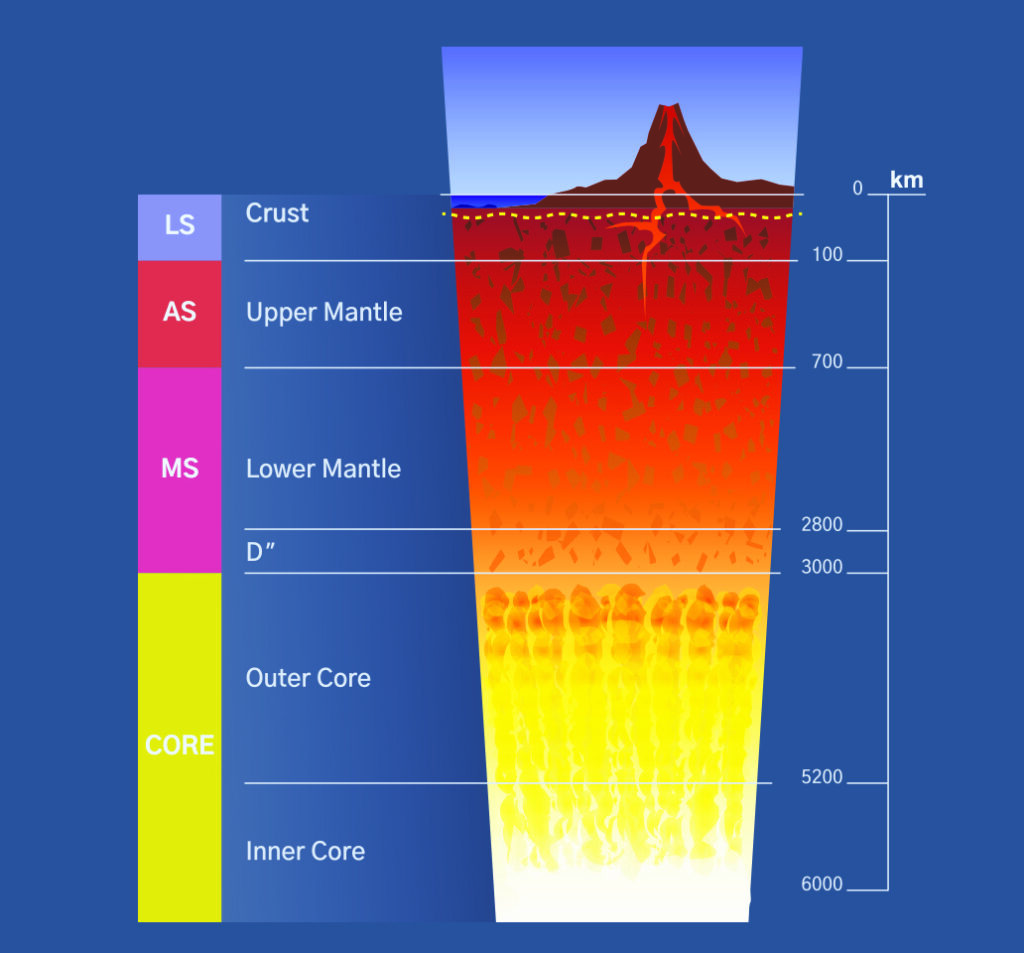
Although among Creationists there are contending models of a supercontinent pre-flood, there seems to be a consensus that the breaking of fountains of the great deep would release a great deal of heat energy from underneath the continents when the springs of the great deep broke up. The heat energy originates at the upper part of the mantle, where temperatures reach over 1000°C (1832°F). The mantle is part of the earth that is sandwiched between the core and the crust, occupying 84% of the volume of the planet. It is made mainly of silica rock that moves upward as liquid magma fills the cracks that appear in the crust or is released explosively, moving up through the crust in the form of volcanic lava.
One of the most dynamic geologic features is the Mid-ocean ridge system, an underwater mountain chain averaging 6,600 feet high from the ocean basin. It is connected continuously in every ocean, extending 40,000 miles, which provides 75% of all the earth’s volcanic activity. The Mid ocean ridge is where the mantle interacts with the crust as the tectonic plates begin to separate, leaving a crack for magma to flow, forming a new ocean bottom. It has been found that the temperature of the mantle increased significantly during the time of the flood, causing the upper mantle to rise and a tremendous amount of energy to be released to produce the water to flood the earth, recycle the earth’s crust, move the continents apart, deposit numerous layers of sedimentary rocks, exemplified in the Grand Canyon, and lastly, push up the mountains as seen in Mount Everest majestically standing 26,000 feet above sea level. Evidence of a catastrophic worldwide flood is widespread.
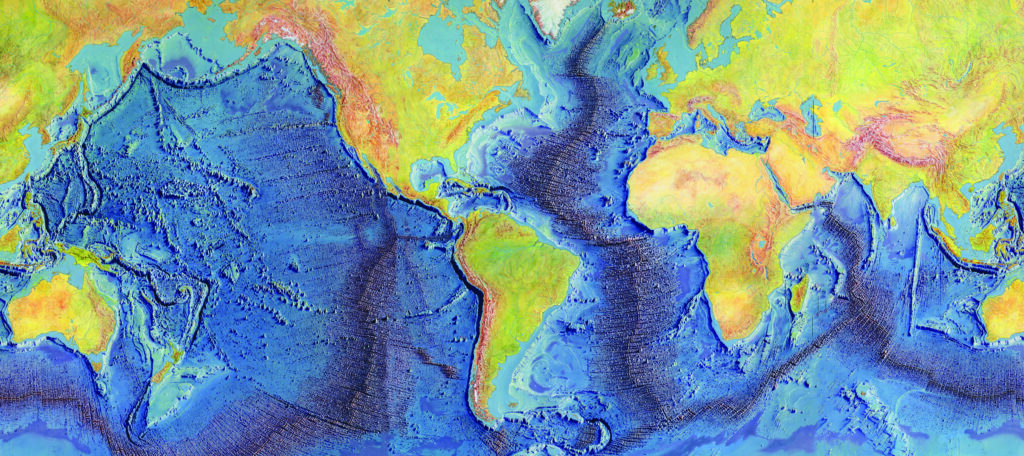
The first observation is that over 70% of the Earth’s surface is covered by ocean water. There is no evolutionary explanation for the origin of water. The only conclusion is from the Genesis Flood’s “springs from the great deep.” The second observation is that the continents mainly formed of sedimentary rock. This is best explained by the quick deposition of sediments transported by the flood waters. These sedimentary rocks are laid down on older rocks with billions and millions of years of evolutionary time missing, known as the Great Unconformity. Lastly, the observation that the fossil record ridge system contains at least 95% marine creatures establishes that the oceans covered the continents. Fossils are representatives of quick burial by water seen in numerous fossil graveyards worldwide that can point to a cataclysmic global flood. Many more observations can be made pointing to a devastating worldwide flood that goes beyond the space we have here. The Genesis Flood is foundational to our faith. It demonstrates that God is just, which includes destroying the wickedness of man. Christ also refers to it in Matthew 24. He refers to Noah’s Flood as a judgment made on mankind and explains that there will be another judgment on the wickedness of man at the end of time. Jesus will come back at an unexpected time, not as our Savior but as a Judge, where “There shall be weeping and gnashing of teeth.” (Matthew 24:51) The Genesis Flood should give us hope because it exemplifies the Gospel. We are saved by faith, just as Noah’s faith in God gave salvation.

