


DNA: God’s Signature
By Tom DeRosa, Executive Director of CSI.
A remarkable discovery in 1953 at Britain’s Cavendish Laboratory transformed molecular biology, genetics, and the world. Working at the famed University of Cambridge physics lab, James Watson, an American molecular biologist and geneticist, and Francis Crick, an English molecular biologist and biophysicist, revealed for the first time how genetic information is stored and copied. And for some, the landmark discovery raised the question of how the voluminous and detailed information inscribed in the cell got there in the first place.
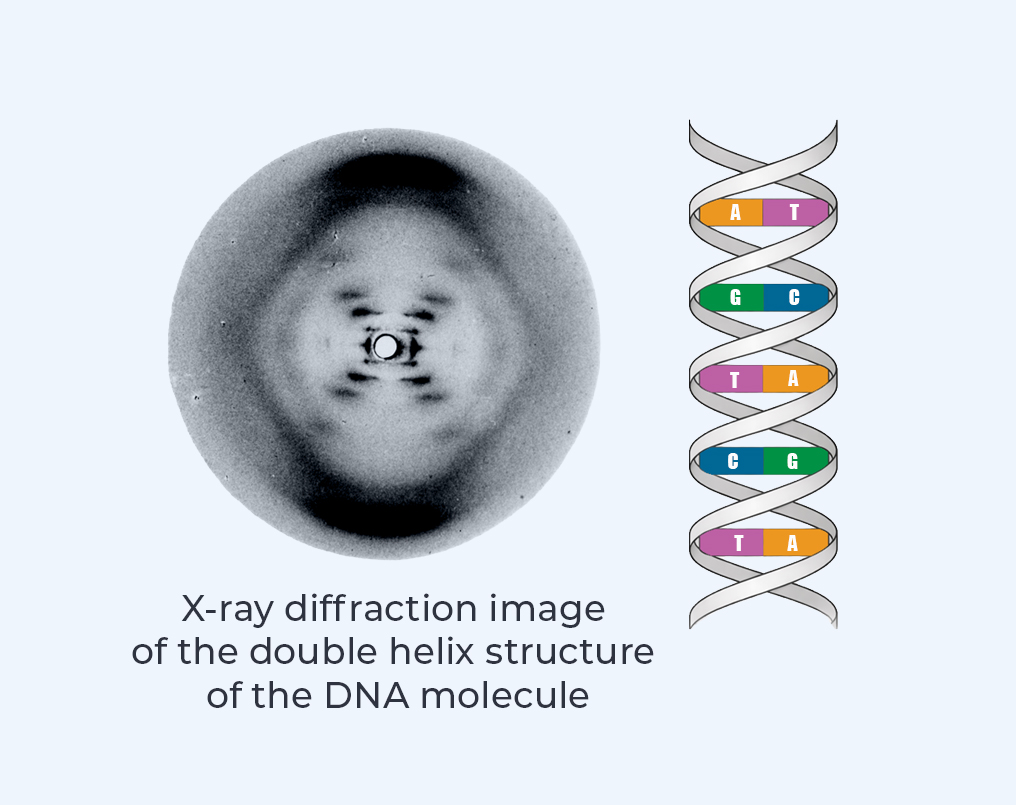
Watson and Crick reached their findings using high-quality X-ray data provided by Roseland Franklyn, an English physical chemist and X-ray crystallographer. Frankland’s data revealed that DNA has a double helix structure, resembling a spiral staircase winding around its axis. It demonstrated that DNA consists of two parallel helices, like the rails of a staircase, which spiral around an axis and are connected by strands of paired nucleotide bases, which store genetic information. These nucleotides are made up of four bases: adenine (A), thymine (T), guanine (G), and cytosine (C), which connect the two helices together in a specific pattern: A only pairs with T, and G only pairs with C. This twisted DNA double helix forms a corkscrew shape, with the bases facing inward, making it an extremely efficient and flexible information system with extraordinary storage capacity.
The DNA molecule is unimaginably long and vanishingly thin. In a single human cell, it measures about 2 meters. The thin filament has a diameter of 2 nanometers (or 2 billionths of a meter). Some 40,000 DNA strands could fit across a single human hair. All the DNA in your body can stretch 60 trillion meters (37 billion miles), or a distance equivalent to 164 round-trips to the Sun and back. (The distance between Earth and Sun is an average of 93 million miles.) A clear indication that this molecular superstructure can only come from the mind of God.
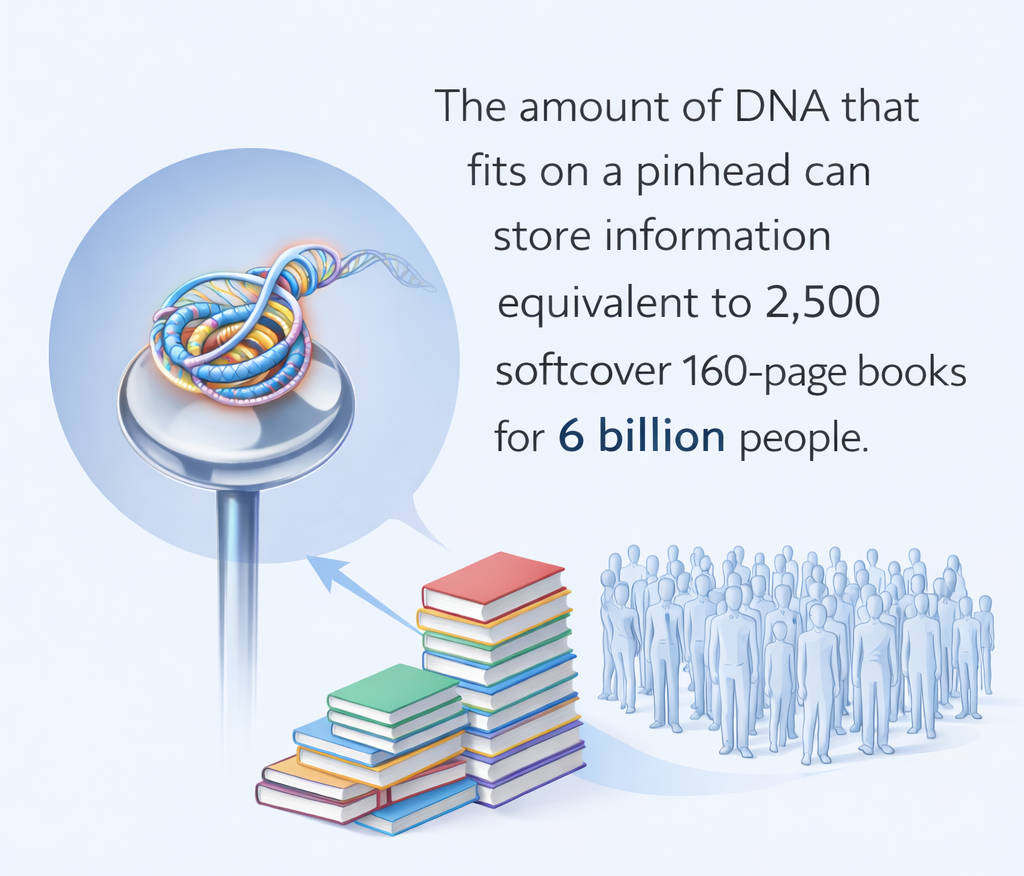
Incredibly thin, the DNA molecule has an amazing storage capacity. The Human Genome Project (1990-2003) was an international effort to decode the entire set of human genetic instructions.When the Human Genome Project was completed, it identified 3.2 billion unpaired bases or 6.4 billion base pairs. That represents 6.4 billion bits of DNA information stored in a very dense space, a 2-nanometer wide thread molecule stretched 2 meters long in one of our cells. The amount of DNA that fits on a pinhead can store information equivalent to 2,500 softcover 160-page books for 6 billion people.1 And one gram of DNA can store as much as 200–215 petabytes (a petabyte is 1 quadrillion bytes or 1,000,000,000,000,000 bytes).
The extremely high storage density of DNA also depends on how tightly the DNA strands are wound in the chromosomes. The 1.8-meter length of a DNA molecule must be significantly condensed to fit into a cell nucleus measuring about 9 micrometers. This is made possible by specially designed proteins called histones, which act like spools when eight assemble, organizing and efficiently winding DNA into a compact volume.
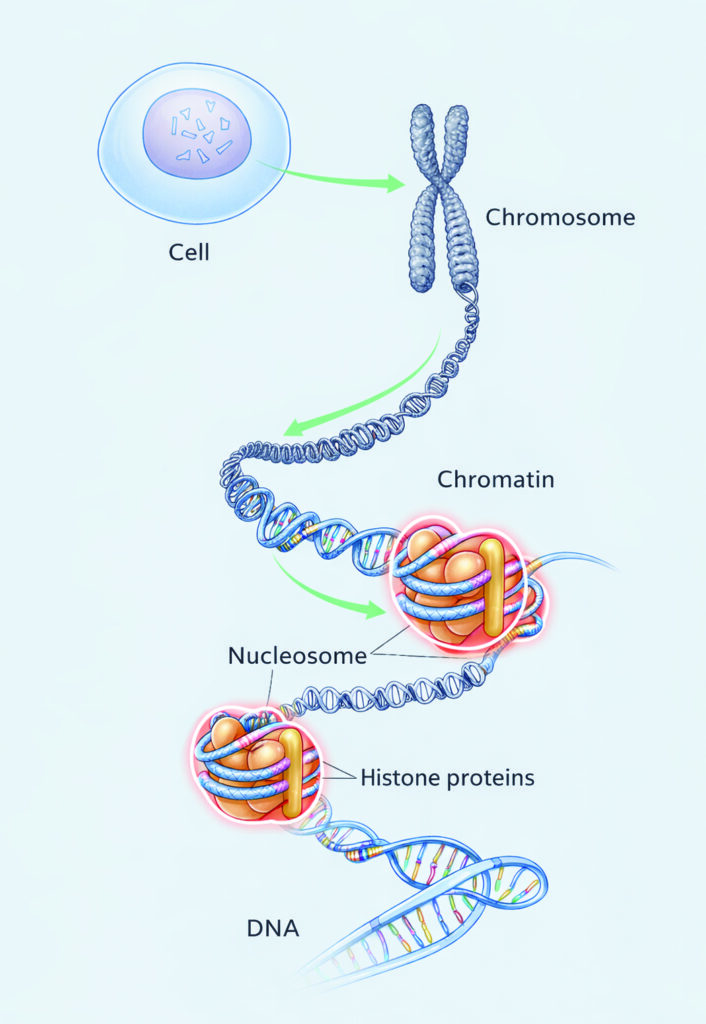
Histones are not only DNA storage units but also regulate DNA so that specific sections, known as genes, can be easily located and accessed to produce necessary proteins. There is an enormous amount of data that must be accessed quickly, and the system’s marvel lies in how histones store it and regulate this process. When the system needs to produce proteins, it opens rapidly, exposing 1,000 to 3,000 base pairs per minute, thereby allowing cells to divide and life to continue. Recently, geneticists have discovered that histones can regulate gene expression by turning genes on by making them available or off by silencing them to make a protein. It is a highly coordinated and complex system, one unmatched by any nonliving system on Earth. And one which bears the unmistakable signature of our Creator.
If you step back and consider the bigger picture, you see a divine intelligence expertly working within a genetic information system responsible for every aspect of our growth. Complex cells that make up plants, animals, fungi, and microscopic organisms like amoebas share a common design: a nucleus with DNA holding genetic information for reproduction, mitochondria for energy production, ribosomes for protein synthesis, and more. These components work together to form a highly coordinated system. We observe this when we breathe air to survive. Without it, we would die. Air is the most important resource for human survival, and it is reported that within 4 minutes, a lack of oxygen can cause permanent brain damage.
The genetic code is responsible not only for producing the complex cell and its functional parts but also for creating different cell types, such as lung cells, which have at least 40 types, all designed to capture oxygen molecules for use by red blood cells. These cells feature the hemoglobin molecule, which is designed to carry oxygen from tiny capillaries to every one of the 30 trillion cells in your body. Where could all this knowledge come from, written in the genetic code for every cell in our body? And, for that matter, all life? It is a manifestation of God’s work in us as stated,
“because what may be known of God is manifest in them, for God has shown it to them”
(Romans 1:19).
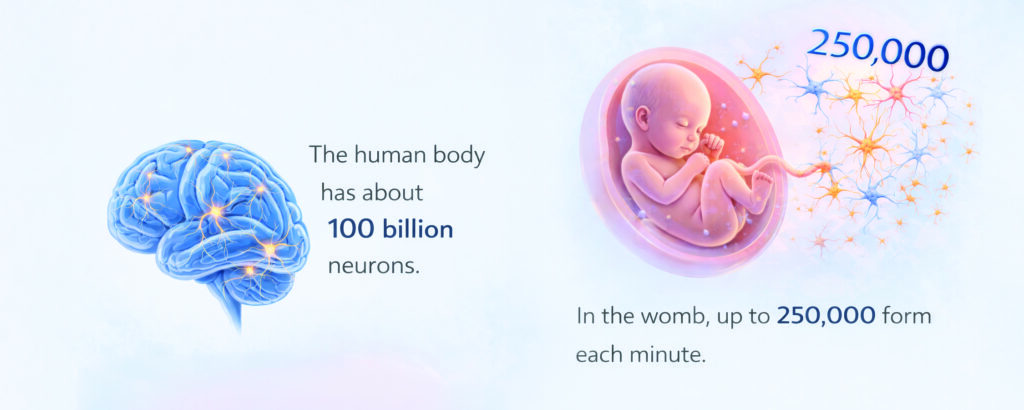
What about our brains? Of the 30 trillion cells in the human body, 100 billion are brain cells (neurons). Most neuron production happens in the womb at the fastest rate known, generating about 250,000 neurons per minute. Each neuron cell is different and can form tens of thousands of connections through its dendrites, small branches that connect to other neurons’ dendrites, creating an extremely complex network.
Even Isaac Asimov (1920-1992), a devoted atheist and one of the most prolific science and science fiction writers of his time, observed the brain’s intricacies and dynamic complexity, stating, “In man is a 3-pound brain, which, as far as we know, is the most complex and orderly arrangement of matter in the universe.” This suggests that the DNA’s genetic code that created our brains is a tool for acknowledging Him in every way, so we have no excuse (Romans 1:20). As King David, inspired by God’s Spirit, declared:
“For you formed my inward parts; you knitted me together in my mother’s womb. I praise you, for I am fearfully and wonderfully made. Wonderful are your works; my soul knows it very well.”
Psalms 139:13-14

